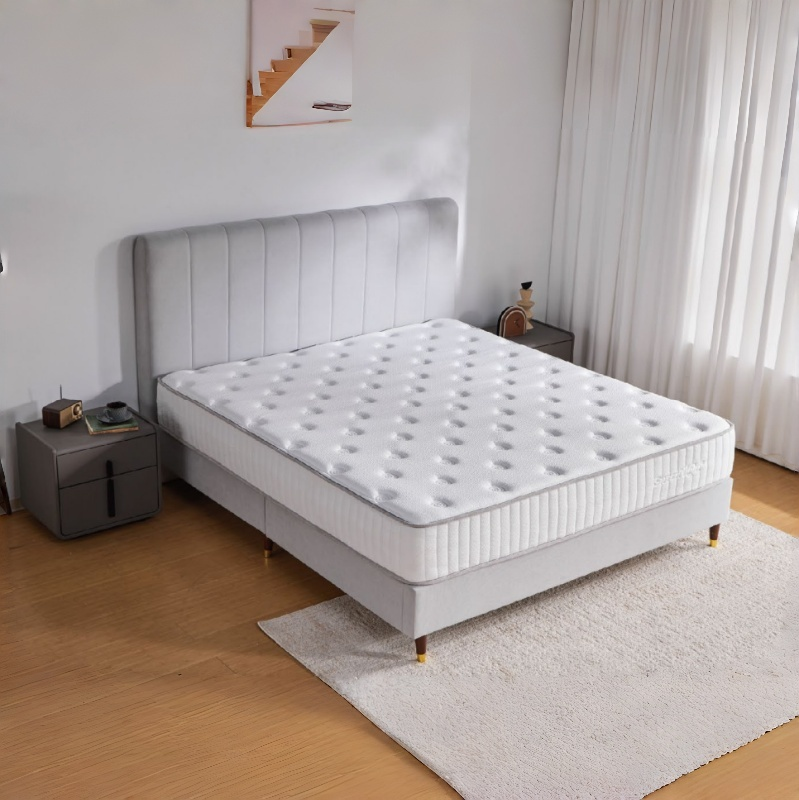
A guest experiences a hotel mattress one night at a time, while the operator purchases it for years of repeated use. That difference changes the specification. Comfort must suit a broad range of guests, but replacement, room consistency, cleaning routines, and procurement records also matter. Resorts may face several room types and seasonal occupancy patterns, making a single generic mattress description too thin for a purchasing decision. Both perspectives shape selection.
Commercial selection begins with the property rather than the catalog. Bed-frame dimensions, intended room categories, desired height, cover requirements, and local project conditions determine which designs deserve sampling. A hotel mattress is part of a room system: a tall model can alter the bed’s final height, while a change in surface feel can make otherwise identical rooms seem inconsistent.
Define the Room Standard
A property can start with a schedule of room types, bed sizes, and replacement quantities. The schedule makes it possible to identify where one construction can be repeated and where a different specification has a real purpose. A hotel mattress manufacturer can then discuss options against those room standards instead of proposing one product for every bed. Written dimensions are especially important when frames, bases, or imported bedding follow different size conventions.
Comfort language needs a physical reference. “Supportive” and “plush” are not precise enough to approve a bulk order. A property may compare sample mattresses for initial pressure, midsection support, edge behavior, and overall height, then record the preferred version. Housekeeping and maintenance teams can add observations about handling and fit. Those checks connect guest experience to the operational work behind it.
Replacing an existing room inventory introduces another constraint. A new mattress can be comfortable but visibly higher or lower than the units in adjacent rooms. A phased replacement program should record the approved model and its dimensions so that later deliveries preserve the room standard. The comparison concerns repeatability, not universal comfort.
Pocket springs, foam layers, and zoning can serve different goals. A pocket-spring unit allows localized response, while the layers above it shape initial feel. A zone design changes support across selected body areas, but its practical effect depends on the complete mattress. A hotel mattress supplier should describe the entire construction and the intended difference between models rather than treating one feature name as a performance guarantee.
Hotel room schedules can distinguish Suisin Furniture models by height and construction. The 25 cm MT-203 places bamboo-charcoal foam alongside high-density support foam. MT-206 uses gel memory foam and multiple foam layers in a 32 cm design. MT-208 has a five-zone pocket-spring system; MT-210 pairs its 2.0 mm smart pocket-spring unit with flame-retardant cotton. These are different specifications; the heights, comfort materials, and support structures need to be assessed against the project’s specific room standards.
Flame-retardant cotton in a product description should not be mistaken for proof of compliance with every destination requirement. A property needs to identify the applicable standard and request relevant documentation for the exact model and market. Similarly, a listed foam or spring feature does not establish expected service life without suitable evidence. Technical claims belong to the proposed construction, not to the category as a whole.
Plan Samples, Production, and Replacement
A sample room can show how a proposed mattress interacts with the frame, headboard, bedding, and room appearance. Staff can observe handling and guests’ likely contact points before a large purchase. The approved sample and written specification then become the reference for a hotel mattress manufacturer during bulk production. If fabrics or dimensions are customized, the record must state those decisions explicitly.
Suisin Furniture supplies hotels, apartments, commercial spaces, and residential projects and says dimensions and fabrics can be customized for project requirements. That scope is relevant to a hotel with several room categories, provided each category has a defined version. A purchasing team can ask which models can share a construction, which require separate samples, and how variations will be identified on the order.
Delivery planning should reflect installation, not merely arrival. Large quantities may need to be received in stages so rooms can remain available. Carton identification, model labels, and a room allocation list reduce the chance that similar-looking mattresses are installed in the wrong locations.
The purchase record should also identify how replacement units will be matched later to the specification. Villas and standard rooms may need separate schedules even under one contract, with model references visible on every delivery record.
Measure the Decision Over Time
A hotel mattress manufacturer is useful when the property can verify and reorder a model. A hotel mattress supplier should provide a clear model specification, agreed dimensions, sample reference, and a way to identify revisions. Property teams can then compare the delivered stock with the approved standard and distinguish a genuine product change from normal room-to-room variation.
For hotels and resorts, mattress choice reaches beyond a showroom impression. It joins guest comfort to room design, installation, compliance questions, and long-term replacement. A defensible project decision names the construction for each room role and preserves that record as the property changes over time.